
Every 40 seconds, someone goes missing in America. That’s over 600,000 people yearly — and police departments solve less than half these cases due to limited resources and strict protocols.
When time matters most, private investigators step in where law enforcement leaves off. We use methods police can’t always employ, work cases they’ve shelved, and give families the dedicated attention their loved ones deserve.
What you’ll learn:
- Why police missing person cases often stall
- How PIs legally access information police can’t
- Real techniques PIs use to track missing people
- When to hire a PI vs. waiting for police
- Cost breakdown and success rates
At Tracked N Solved™, we’ve reunited families across Idaho and beyond for over a decade. Our ex-law enforcement team knows both sides of missing person cases — and exactly how to bridge the gap when official channels fall short.
Why Police Missing Person Cases Often Stall
Police departments are overwhelmed. The average detective juggles 15-20 active cases at once, and missing persons often take a backseat to violent crimes and emergencies.
Here’s what really happens when you file a missing person report:
The 24-48 Hour Wait
Most departments still enforce waiting periods for adults. By the time they start investigating, critical evidence has already vanished. Witnesses forget details. Security footage gets overwritten. Digital trails go cold.
Resource Allocation Reality
Police prioritize cases based on risk factors:
- Children and elderly? High priority
- Adults with no signs of foul play? Bottom of the stack
- History of leaving before? Even lower
Your loved one becomes a case number competing for attention.
Jurisdictional Handcuffs
Did they cross state lines? Now you’re dealing with multiple departments that barely communicate. International? Good luck. Police need warrants, formal requests, and bureaucratic approvals that take weeks — time you don’t have.
The “Voluntary Missing” Problem
Adults have the legal right to disappear. Unless there’s evidence of a crime, police often classify cases as “voluntary missing” and scale back efforts. They’ll enter the person into databases but won’t actively search.
Meanwhile, every hour counts. Phone records expire, bank transactions pile up unnoticed, and that last known location becomes less relevant. You need someone who can start now — not after the red tape clears.
How PIs Access Information Police Can’t

Private investigators operate in a legal sweet spot. We follow the same laws as everyone else — but without the restrictions that tie police hands.
No Warrant? No Problem
Police need probable cause and a judge’s signature to access most information. PIs? We work differently:
- Public records — instant access to property, court, and business filings
- Social media — no department approval needed to search profiles
- Witnesses — we talk to them informally, no Miranda rights required
- Subscription databases — tools police departments can’t afford
The average police department waits 7-10 days for a basic records request. We get the same information in hours.
The Power of Private Databases
We invest in specialized tools that aggregate billions of data points:
| Database Type | What It Reveals | Speed |
| Skip Tracing Software | Address history, relatives, associates | Real-time |
| Cell Tower Data* | Location patterns, travel routes | 24 hours |
| Financial Headers | Asset locations, hidden accounts | Same day |
| Vehicle Tracking | Registration changes, parking violations | Instant |
*With account holder consent
At Tracked N Solved™, we maintain subscriptions to all major databases — an investment most smaller firms can’t match. Our skip tracing services alone have located missing persons across Idaho, Washington, and even internationally when police databases came up empty.
Working the Gray Areas
Police follow strict evidence rules that slow everything down. PIs move faster because we:
- Interview witnesses before memories fade (no 72-hour wait)
- Cross state lines without jurisdictional delays
- Use pretexting legally in Idaho to locate missing persons
- Access security footage before the 30-day auto-delete
While police wait weeks for subpoenas, we help families request bank records directly. Phone records? Same day with the account holder’s consent. The difference isn’t breaking laws — it’s knowing which doors open without warrants and having the resources to walk through them immediately.
Real Techniques PIs Use to Track Missing Child or Adult
Finding someone who doesn’t want to be found — or can’t call for help — takes more than Google searches. We use proven techniques that combine technology, psychology, and boots-on-the-ground investigation.
Digital Footprint Analysis
Everyone leaves digital breadcrumbs. We start with the obvious — Facebook, Instagram, LinkedIn — then dig deeper:
- Gaming platforms (Xbox Live, Steam, Discord)
- Dating apps with location features
- Venmo/Cash App public transaction histories
- Spotify activity showing last played songs
- Fitness apps like Strava revealing running routes
Financial Pattern Tracking
Money leaves trails. With family permission, we analyze:
| Transaction Type | What It Reveals |
| ATM withdrawals | Current location, movement patterns |
| Credit card use | Hotels, gas stations, favorite stores |
| Subscription charges | Gym memberships, streaming services |
| Auto-payments | Storage units, PO boxes |
Pro tip: Recurring charges often reveal hideouts. That $39 monthly storage unit fee? Could be where they’re staying.
Vehicle Intelligence
Cars are harder to hide than people. Our surveillance team uses:
- License plate recognition cameras at key intersections
- Parking violation databases
- Toll road records
- Repo and towing company networks
- Gas station security footage along likely routes
We’ve tracked vehicles through three states using nothing but parking tickets and toll records.
Human Intelligence (HUMINT)
Technology only gets you so far. Real breakthroughs come from talking to the right people:
- Inner circle interviews — best friends know secrets family doesn’t
- Workplace contacts — coworkers notice behavior changes first
- Local business canvassing — gas stations, motels, diners
- Online community infiltration — hobby groups, forums, game servers
Our investigators build trust quickly. People tell us things they won’t tell police because we’re not there to arrest anyone — just bring them home safely.
Behavioral Pattern Analysis
Everyone has habits. We map out:
- Favorite coffee shops, bars, restaurants
- Hobbies and regular activities
- Medical needs (pharmacies they’d use)
- Comfort zones and familiar areas
Missing persons rarely venture far from their patterns, even when running. Someone who loves hiking won’t hide in Manhattan. A city person won’t last long in rural Wyoming.
Tracked N Solved™ combines all these techniques simultaneously. While one investigator analyzes digital trails, another interviews contacts, and our surveillance team stakes out likely locations. This multi-pronged approach means we often locate missing persons in days, not months.
When to Hire a PI vs. Waiting for Police
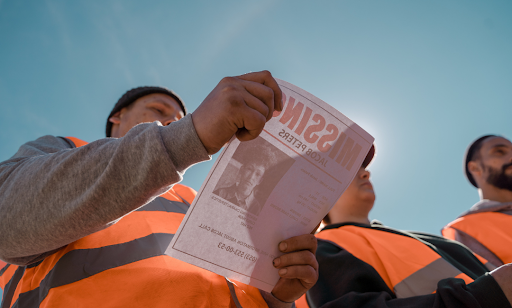
Timing is everything in missing person cases. Knowing when to supplement police efforts with a private investigator could mean the difference between a quick reunion and a permanent disappearance.
When Police Are Your Best First Step
Always file a missing person report immediately — it’s free, creates an official record, and activates important resources:
- Missing children under 18: Law enforcement agencies treat these as emergencies. The National Center for Missing & Exploited Children mobilizes instantly
- Signs of foul play: Blood, struggle, threatening messages
- Mental illness or medical conditions: Police issue Silver Alerts faster
- Elderly with dementia: Immediate response, no waiting period
Local law enforcement has resources PIs don’t: Amber Alerts, helicopter searches, and the ability to force entry when lives are at stake.
When You Need a PI Right Away
Don’t wait for police to deprioritize your case. Hire a PI when:
- Adults Who “Chose” to Leave: Your spouse empties the bank account and disappears? Police see it as a domestic issue, not a missing person case. Family members left behind need answers that police won’t seek.
- Cross-Jurisdictional Cases: Person last seen in Idaho, car found in Montana, credit card used in Wyoming? Local police struggle to coordinate. We work seamlessly across state lines while departments argue over whose case it is.
- The 72-Hour Black Hole: Missing adult with no signs of danger? Many departments still won’t investigate for 72 hours. By then, hotel records are gone, witnesses forget identifying marks, and digital trails grow cold.
- “Frequent Flyer” Situations: Has your loved one disappeared before? Police officers often downgrade repeat cases. We treat every disappearance seriously — mental illness and addiction don’t make someone less worthy of being found.
When You Need Both
Smart families work both angles:
| Police Handle | PIs Handle |
| Official missing person report | Immediate investigation |
| Search warrants (when approved) | Database searches |
| Criminal investigation | Financial tracking |
| Physical searches | Surveillance operations |
| Inter-agency coordination | Direct action |
Red Flags That Scream “Hire a PI Now”
- Police say “they’ll probably come back”
- You’re told to wait 24-48 hours
- Case assigned to overworked detective
- No updates after one week
- Classified as “voluntary missing”
Cost vs. Consequence
Yes, PIs cost money. But consider this: the average missing person case costs families thousands of dollars in lost work, travel, and search expenses when dragged out for months. Our focused investigation often locates people in days for a fraction of that.
Don’t wait for your loved one to become a statistic. If police aren’t actively searching, you need someone who will.
Cost Breakdown and Success Rates
Let’s talk money — because when someone you love is missing, you need real numbers, not vague promises.
What You’ll Actually Pay
Private investigator costs for missing person cases range from $300 to thousands of dollars, depending on case complexity and investigation length. Here’s the breakdown:
| Service Type | Cost Range | What You Get |
| Basic Search | $200-$1,000 | Database searches, local inquiries |
| Standard Investigation | $1,000-$5,000 | Active surveillance, interviews, multi-state search |
| Complex Cases | $4,800-$7,500+ | Nationwide searches, international cases |
| Hourly Rates | $50-$200/hour | Ongoing investigations |
The Real Cost Factors
Finding a missing person can be labor-intensive, involving deep background research, public record searches, and field investigation. What drives your final bill:
- Geographic scope — Costs escalate if the search spans multiple jurisdictions or countries
- Case complexity — Voluntary missing vs. suspicious circumstances
- Time sensitivity — Rush cases require more investigators
- Travel expenses — Gas, flights, hotels add up quickly
- Database access — Professional-grade tools cost thousands monthly
Tracked N Solved™ offers transparent flat-rate packages for most missing person cases. No surprise bills, no hourly meter running while you wait for answers.
Success Rates: The Numbers That Matter
Here’s what the industry doesn’t advertise: Once it gets out to seven days, we highly recommend that you hire somebody, and then the next marker is 30 days. Why? Because success rates plummet after the first week.
When PIs Find People:
- First 48 hours: Highest success rate (exact percentage varies by case type)
- First week: About 90% of the time, interviewing family, friends, relatives, and coworkers will lead you to finding that person
- After 30 days: Cases become significantly harder
ROI: Is It Worth the Cost?
Consider this reality check:
- On any given day there are as many as 100,000 actively missing person cases in the United States
- Only 7% of law enforcement agencies have dedicated cold case units
- Amateur searches often waste precious time and money
Payment Structures That Work
Most reputable PIs offer:
- Retainer fees — $1,000 for simpler cases to $5,000 or more for complex investigations
- Flat rates — Best for defined searches with clear parameters
- Hourly billing — For open-ended or surveillance-heavy cases
- Payment plans — Many firms understand the financial strain
Red Flags to Avoid
- PIs charging under $40/hour (likely unlicensed)
- “Guaranteed” results (no ethical PI promises this)
- Huge upfront payments with no contract
- Refusing to provide references or license numbers
The bottom line? Hiring a qualified private investigator is your best option if you’re serious about finding a missing person. Yes, it costs money. But when weighed against the alternative — your loved one staying missing — the investment becomes clear.
Finding Missing Loved Ones? Let Tracked N Solved™ Bring Them Home
When police resources fall short and every hour counts, private investigators bridge the critical gap. We’ve covered the harsh realities — and the hope that professional investigation brings.
Key takeaways:
- Police often wait 24-72 hours; PIs start immediately
- Success rates drop dramatically after the first week
- PIs access databases and use methods police can’t
- Costs range from $200-$7,500, depending on complexity
- Professional investigators succeed where amateur searches fail
We’ve reunited families at Tracked N Solved™ when official channels couldn’t. Our ex-law enforcement team combines police training with PI freedom — working across Idaho and beyond until your loved one comes home. Don’t wait for your case to go cold. Call 208-298-8842 now for immediate assistance.
FAQs
Can the FBI help find a missing person?
The FBI typically assists when there’s evidence of kidnapping, crossing state lines, or when victims are children. For example, they’ll investigate if a boy is taken by a non-custodial parent across state borders. For most adult cases without criminal evidence, local agencies handle the investigation. In the meantime, families often hire PIs to assist while waiting for federal involvement.
Do detectives work on missing person cases?
Yes, police detectives are supposed to investigate missing persons, but their caseloads affect response time. Past experience shows detectives prioritize cases with evidence of foul play. When something seems wrong — like finding belongings where they shouldn’t be or getting conflicting stories from witnesses — detectives become more involved. However, adult cases without suspicious circumstances often receive minimal attention.
What is the first thing to do when someone is missing?
File a police report immediately — there’s no waiting period despite what you’ve heard. Gather recent photos showing what they were wearing, contact their workplace, and check with friends and parents. Our advice? Start documenting everything. The wrong move is waiting because you’re expected to give them space. Time destroys evidence.
When can you report a missing person in the USA?
You can report anyone missing immediately — federal law prohibits mandatory waiting periods. Don’t believe the “24-hour rule” story. Whether adult or child, if their absence is unusual or concerning, report it. Police must take your report, though their investigation level varies based on age and circumstances.